A History of the Leather Jacket: From Aviator Cockpits to Cultural Icon
No garment carries a heavier mythology than the leather jacket. It has been worn by aviators, soldiers, outlaws, rock stars, presidents and grandmothers. It is the rare piece of clothing that means something to almost everyone who sees it. To understand how it earned that meaning, we have to go back more than a hundred years.
1913 — The First Flying Coat
The leather jacket as we know it began in 1913, when a German company called Irvin began stitching long, double-breasted leather coats for early aviators. Cockpits were open. At ten thousand feet the air was freezing and the wind shredded fabric. Leather — heavy, wind-proof, warm when lined with sheepskin — was the only material that worked.
When the First World War began a year later, those coats became standard issue for the Royal Flying Corps and the German Luftstreitkräfte. Pilots returning from the front kept their flying coats, and the rest of the world saw them for the first time. The leather jacket entered civilian life as a relic of heroism.
1928 — Schott Perfecto and the Birth of the Biker
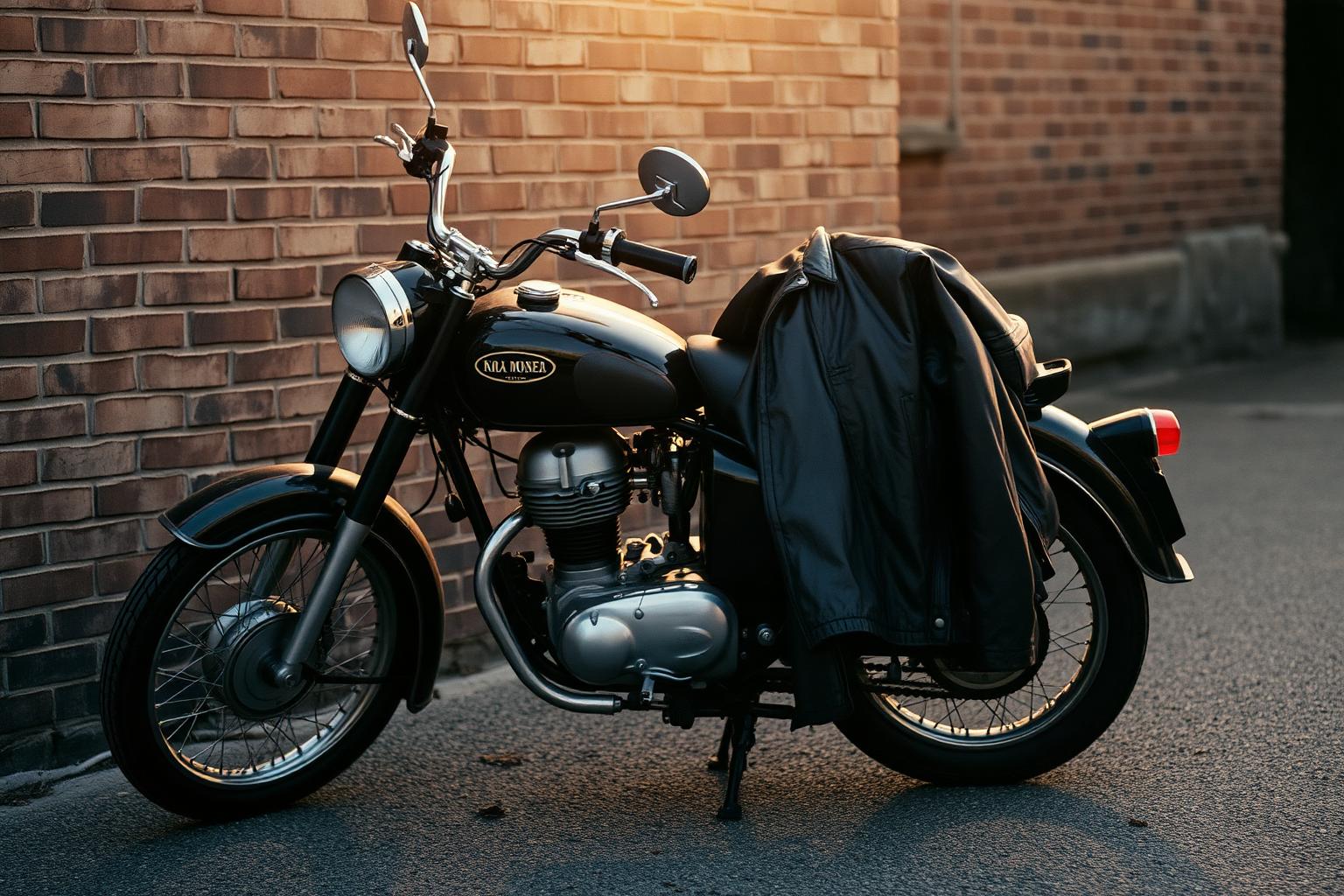
In 1928 a Russian immigrant tailor in New York named Irving Schott designed a jacket for a Harley-Davidson distributor. He used black horsehide, fitted it with an asymmetric zipper (to fold against wind when leaning into a turn), added snap-down lapels, and named it the Perfecto, after his favourite cigar. Until then no garment had used a zipper as a centrepiece — it was considered crude. Schott made the zipper a symbol.
The Perfecto cost $5.50 — a week's wages for a working man. It sold slowly at first. Then, in 1953, it appeared on a single shoulder, and everything changed.
1953 — Marlon Brando and The Wild One
Marlon Brando played Johnny Strabler in The Wild One wearing a Perfecto. The film, loosely based on a 1947 motorcycle riot, made the leather jacket synonymous with rebellion. Schools across America banned it. Sales of the Perfecto collapsed for nearly a decade — and then, predictably, exploded among the very teenagers the bans were meant to protect.
The leather jacket was no longer a garment. It was a position. To wear one was to declare which side of the line you were on.
1955 — James Dean and the Quiet Threat
Two years later, James Dean appeared in Rebel Without a Cause in a red windcheater, but the photographs that became iconic — the ones taken off-set — showed him in a black leather jacket, hands in pockets, staring into nothing. Dean made the leather jacket cool by being still inside it. Brando had used it as a weapon. Dean used it as a uniform of interior life. Both meanings live in the jacket today.
1960s — Steve McQueen and the Aviator's Return
In the 1960s the leather jacket split into two distinct lineages. The biker jacket grew darker, heavier and more aggressive — claimed by motorcycle clubs, Hells Angels chapters, and outsiders. The aviator jacket — particularly the A-2 worn by US Army Air Forces in WWII — returned to civilian wardrobes via Steve McQueen, who wore his on and off screen with the studied casualness of a man who didn't need to try.
McQueen's brown A-2 became, and remains, the most quietly powerful jacket a man can own — softer than a biker, more grown-up than a bomber, with no need to announce itself.
1976 — The Ramones and the Punk Reboot
In 1976 four men from Queens, New York, walked onto a stage at CBGB in identical Schott Perfectos, ripped jeans and white sneakers. The Ramones gave the leather jacket back to people who could not afford it but desperately needed it. Punk took the jacket from biker gangs and movie stars and turned it into a uniform of refusal. Vivienne Westwood, Sid Vicious, Joan Jett — every face of the era wore one.
From this point on, the leather jacket belonged equally to women. Joan Jett's Perfecto, worn through the late 70s and into Runaways-era fame, broke the last gendered association the garment had carried. After her, every woman could own the symbol.
1980s — Cropped, Coloured, Power-Shouldered
The 1980s did to leather what the 1980s did to everything: amplified it. Jackets grew shoulder pads. Colours expanded into oxblood, cream, and electric blue. Michael Jackson's red Thriller jacket (1983) became the most-imitated piece of clothing of the decade. In Top Gun (1986), the G-1 naval aviator jacket — patches, fur collar, brown horsehide — sold out of every Schott dealer in America for two years.
Top Gun and Thriller did the impossible: they made the leather jacket popular enough to lose meaning, and somehow it kept meaning anyway.
1990s — Minimalism and the Return of the Black Biker
The 1990s stripped the jacket back. Helmut Lang in 1995 produced a leather jacket so plain it looked unfinished — and that was its point. Calvin Klein photographed Kate Moss in nothing but a perfect black biker. Minimalism made the leather jacket cool again by removing every reference and leaving only the silhouette.
Meanwhile, in Seattle, Kurt Cobain wore an oversized brown leather jacket inherited from a friend. Grunge's leather was secondhand, slightly too big, and worn over a thrift cardigan. The jacket could now mean wealth or anti-wealth. Either was fine.
2000s–2020s — Maison Era
In the 21st century the leather jacket was reclaimed by maisons. Rick Owens reimagined the silhouette in elongated, drape-heavy cuts. Saint Laurent under Hedi Slimane reissued the perfect skinny biker. Acne Studios put the leather jacket on every fashion editor in Stockholm. Bottega, Celine and The Row produced quiet, almost invisible pieces that cost more than most cars.
The democratic jacket of the 1980s became, again, a marker of taste. But the meaning never left. A leather jacket is still a small declaration: I have stood in this. I am not going to apologise for taking up space.
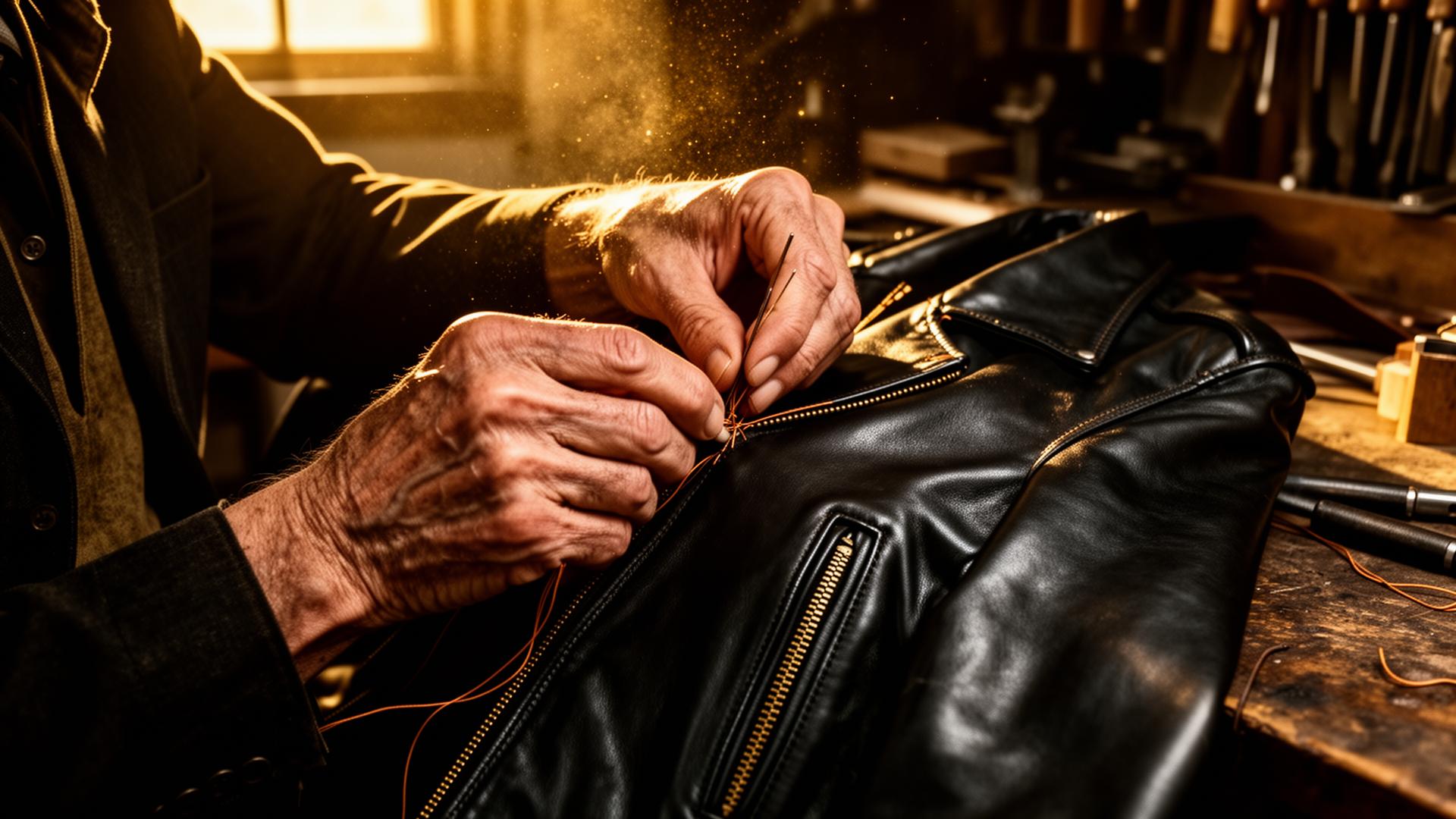
Why It Endures
Other garments come and go. The leather jacket has survived every cultural shift of the last hundred years because it carries every shift inside it. Aviator, biker, rebel, rock star, model, executive, grandmother — the jacket holds them all.
When you put one on, you join a hundred-year conversation. That is why nothing has replaced it, and nothing will.
Leather worth writing about.
Discover the pieces behind the words.
Visit the Collection