The Complete Leather Jacket Care Guide: How to Clean, Condition and Restore Every Type of Leather
A leather jacket is a living object. It breathes, it remembers, it ages. Cared for properly, a single jacket can outlast every other garment in your wardrobe — and become more beautiful with every passing year. Cared for poorly, the same jacket dries, cracks and splits in less than a decade. The difference is no more than fifteen minutes of attention, twice a year. This is the complete care guide we use at the maison.
1. First, Identify Your Leather
Every leather has its own personality, and each demands a slightly different ritual. Before you reach for a brush or balm, identify what you are working with. Full-grain leather is the most premium — it carries the entire natural surface of the hide, including pores and small scars, and develops the deepest patina over time. Top-grain has been lightly sanded for uniformity. Corrected-grain (or genuine leather) has been heavily processed. Suede is the soft underside of the hide, with a velvety nap. Nubuck is the outer side sanded to a similar nap, but tougher. Lambskin is the lightest and most delicate, prized for its buttery hand.
The care for smooth leathers (full-grain, top-grain, lambskin) is broadly similar: clean, condition, protect. The care for napped leathers (suede, nubuck) is entirely different and uses no liquid conditioner. Mixing the two ruins both.
2. The Weekly Ritual: Dust and Wipe
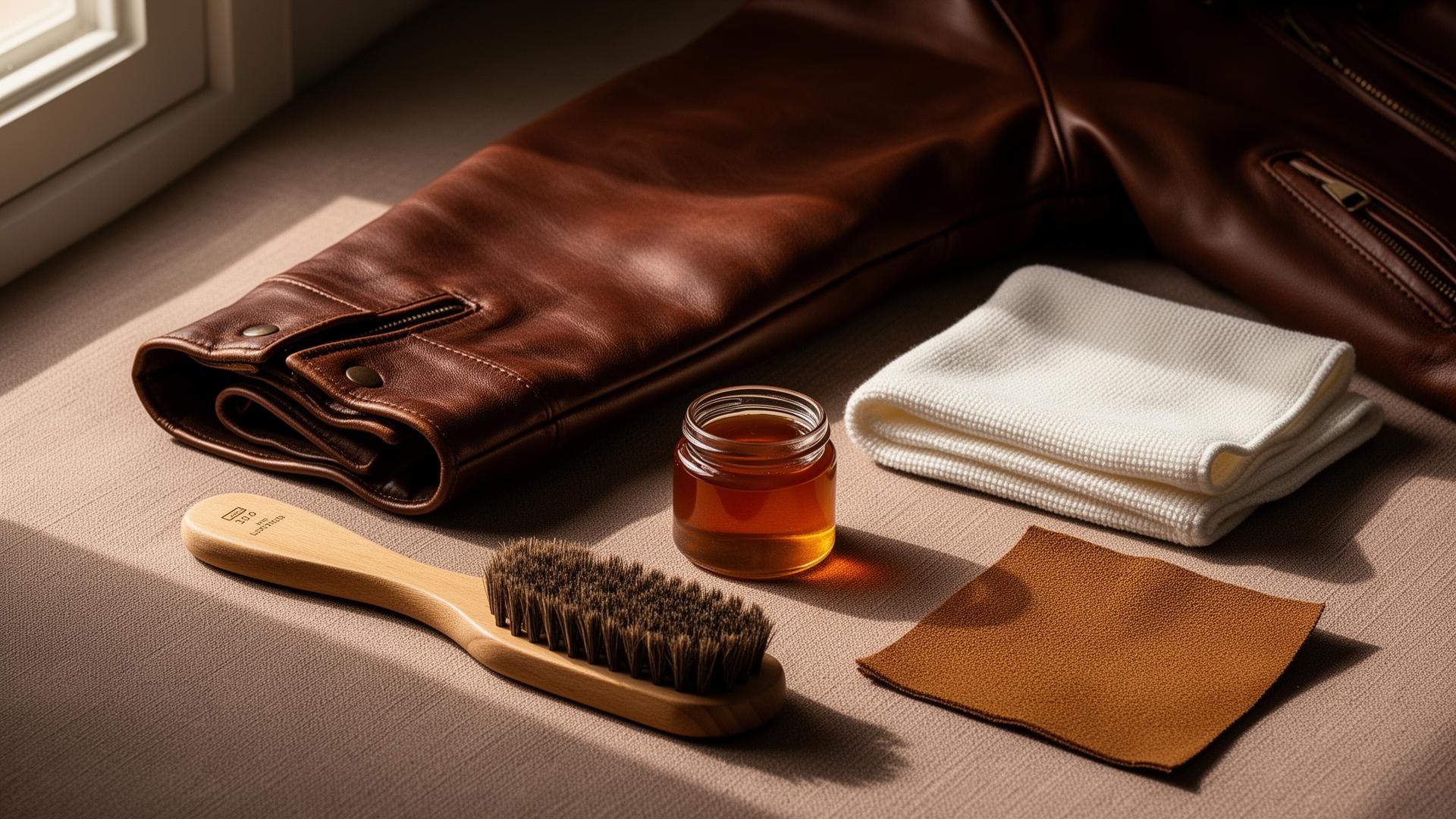
Once a week, after wearing your jacket, take sixty seconds to brush it down with a soft horsehair brush, paying attention to the seams and cuffs where dust collects. For smooth leathers, follow with a dry microfibre cloth — never paper towel, which is mildly abrasive. For suede or nubuck, use a dedicated suede brush with brass bristles, always brushing in one direction first to lift dirt, then back the other way to restore the nap.
This single weekly habit prevents 90% of long-term damage. Dust, salt and city grime are micro-abrasive — left in place, they erode the surface in invisible increments.
3. The Seasonal Conditioning (Smooth Leathers Only)
Twice a year — once before winter, once before summer — your smooth leather jacket needs feeding. Leather is skin, and like skin it loses oils. Without replacement those oils disappear forever, and the leather becomes brittle.
Use a high-quality leather balm or conditioner — never mink oil for fashion leather (it darkens dramatically), never household products like olive oil (they go rancid inside the leather and accelerate decay), never silicone-based sprays (they seal the pores and suffocate the hide). At the maison we use a beeswax-and-lanolin formulation. Brands like Saphir Renovateur, Bickmore Bick 4, and Leather Honey are reliable alternatives.
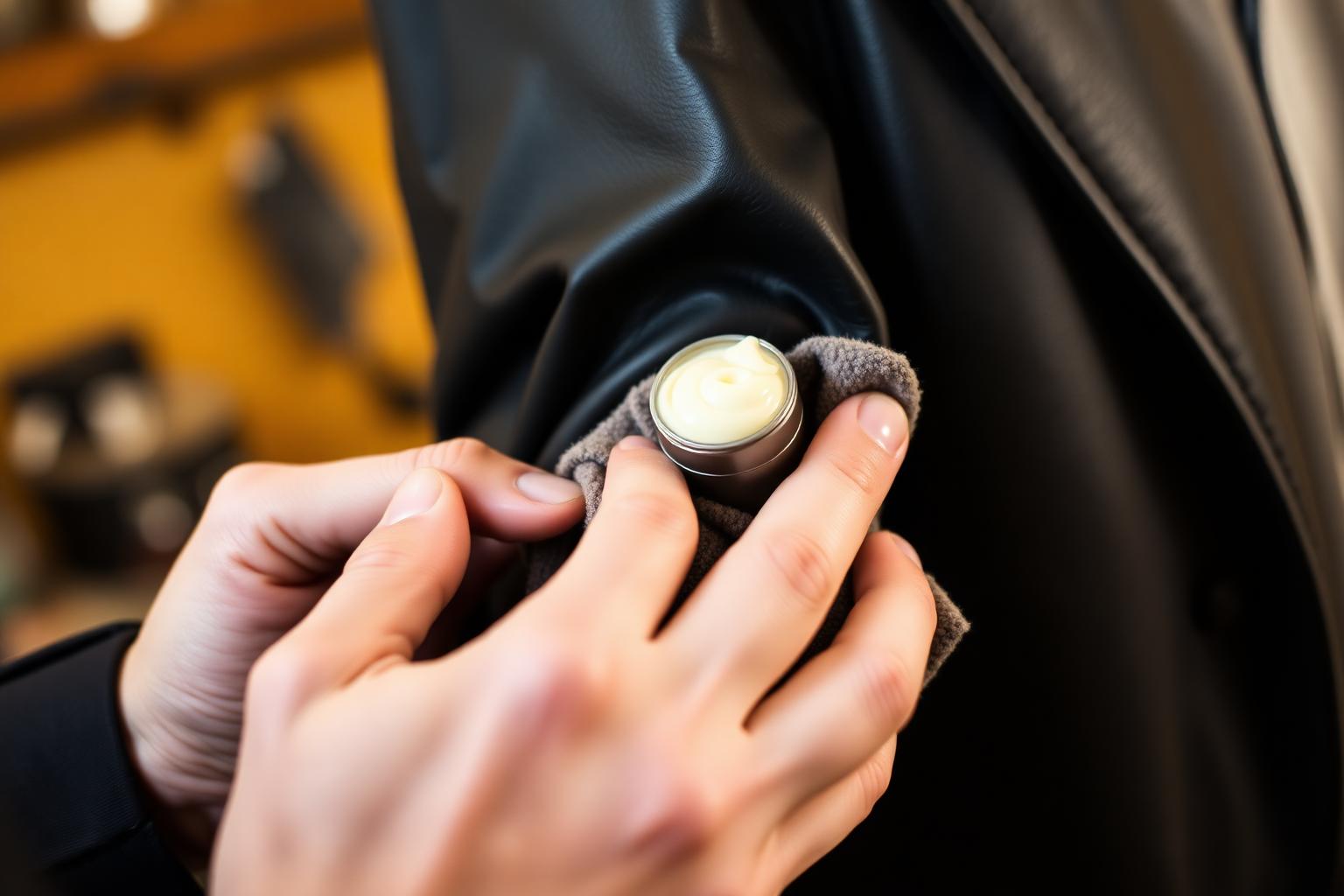
Apply with a soft cloth in small circles, working one panel at a time. Use far less than you think — leather absorbs slowly, and excess sits on the surface attracting dust. Let it rest for an hour, then buff gently with a clean cloth.
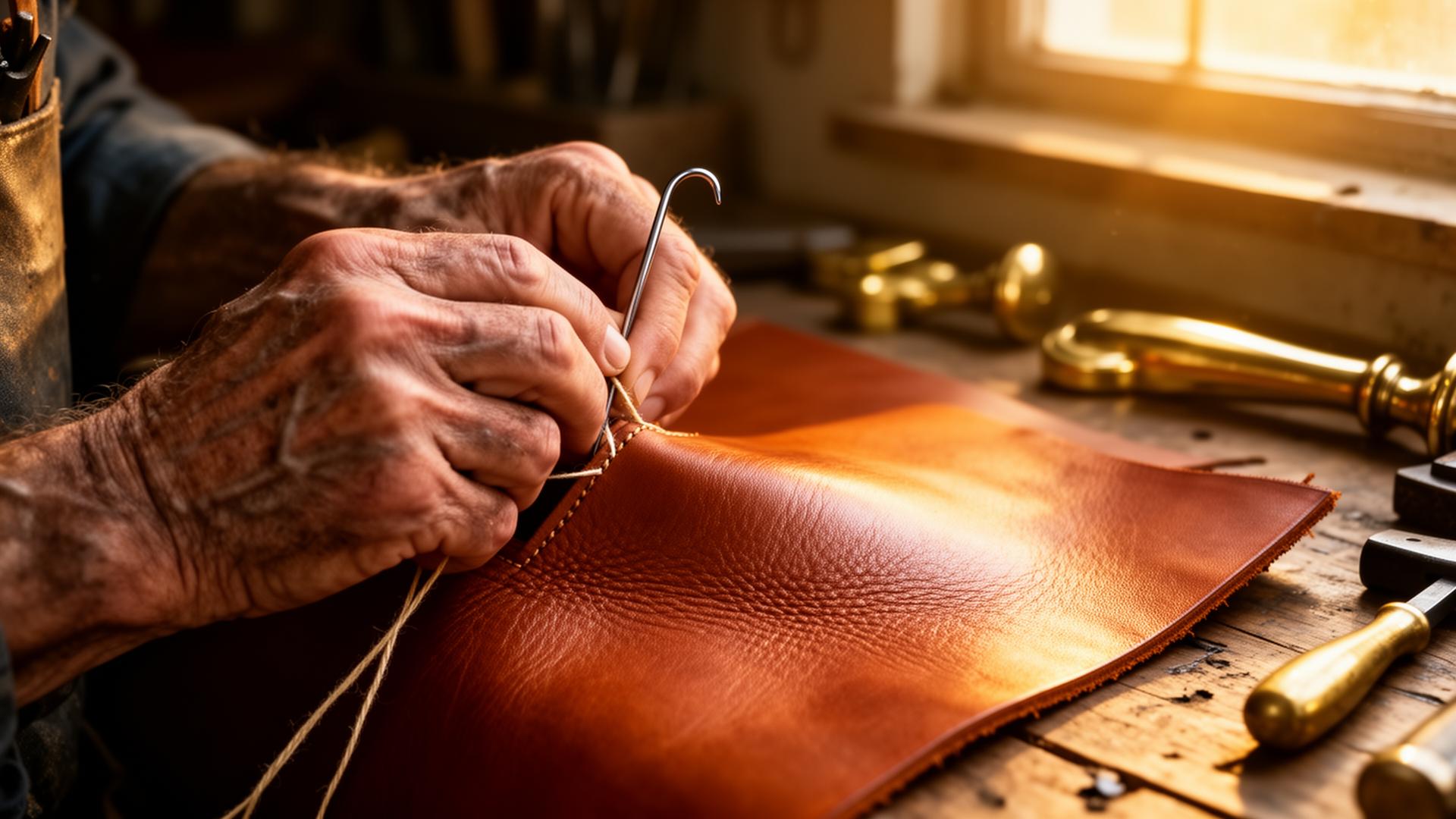
4. Spot-Cleaning Stains (Step by Step)
For light dirt: a damp microfibre cloth (water only, well wrung out), gently rubbed in the direction of the grain. Dry immediately with a second cloth.
For grease and oil: do NOT add water — it will set the stain. Sprinkle cornstarch or talcum powder generously over the spot, leave overnight, then brush away. Repeat if needed.
For ink: address it within minutes if possible. Dab (never rub) with a cotton swab dipped in 99% isopropyl alcohol, working from outside the stain inward. Old ink usually requires a professional.
For salt stains (winter's curse): mix one part white vinegar with one part distilled water, apply with a cloth, dab dry, condition the area within 24 hours.
For mould: brush off in a well-ventilated outdoor space, then wipe with a 1:1 vinegar–water mix. Air-dry for 48 hours. If mould has penetrated the lining, see a specialist.
Never use baby wipes, alcohol-based cleaners, ammonia, bleach, magic erasers, or saddle soap on fashion leather. Saddle soap is for boots and saddles — it strips the finish off jackets.
5. Suede & Nubuck — A Different Discipline
Suede and nubuck have no protective topcoat. They live or die by what touches them, so prevention is everything. Before the first wear, treat with a colourless suede protector spray (Collonil Carbon Pro is excellent). Reapply every 6–8 wears.
For dry dirt, brush with a brass-bristle suede brush. For scuffs, rub gently with a suede eraser, then brush to restore the nap. For wet stains, blot — never wipe — with a clean cloth, stuff the jacket with white tissue paper (newsprint transfers ink), and let it dry completely away from heat. Once dry, brush thoroughly.
Liquid conditioner of any kind will permanently damage suede. Treat it instead like a beautiful pet — kept dry, brushed often, and respected.
6. Drying a Wet Leather Jacket (The Rules)
If your jacket gets caught in rain, the next thirty minutes determine whether it survives intact. Hang it on a wide wooden hanger immediately. Blot — do not wipe — excess water with a clean towel. Then leave it alone, in a cool, well-ventilated room, away from any heat source.
Never use a hairdryer, radiator, fire, tumble dryer, or direct sunlight. Heat dries leather from the outside while the inside is still wet, causing the layers to separate — the hide cracks irreversibly. A naturally damp jacket can take up to 24 hours to dry, and that is correct. Once dry, condition lightly to replace the oils the water leached out.
7. Storage — Where Most Jackets Die
More leather jackets are killed by storage than by wear. The three rules are: room to breathe, no plastic, no direct light.
Use a wide, contoured wooden hanger that supports the shoulders properly. Wire hangers permanently deform the shoulder line in months. Cover the jacket in a cotton or canvas garment bag — never plastic, which traps moisture and breeds mould. Store away from windows; UV light fades the surface and bleaches dyes.
If storing for the season, condition once before storing, place a silica gel sachet inside, and check it every two months. Leather kept in dark, dry, ventilated conditions can rest for years and emerge unchanged.
8. When to Call a Professional
Some jobs are not for the home: deep cleaning of an entire jacket, re-dyeing a faded panel, replacing a torn lining, or restoring a vintage piece that has dried out. Find a specialist leather cleaner — not a regular dry cleaner, who will almost certainly damage it. Ask to see examples of their work, and never let anyone use solvents on a fashion leather.
A good leather restorer can take a jacket that looks finished and bring it back to life. We have seen pieces from the 1960s emerge from skilled hands looking thirty years younger. That is the gift of leather — it is, almost always, salvageable.
9. The Long View
Care for a leather jacket the way you would care for a wooden floor or a leather-bound book: rarely, gently, and with the right materials. Fifteen minutes twice a year is all that stands between a jacket that lasts a season and a jacket that lasts a lifetime. Choose the second.
When you next reach for your jacket, run your hand along the sleeve. Notice how the leather has taken the shape of your arm, how the colour has deepened where the sun has touched it. That is patina — the visible record of a life well lived. It cannot be bought, only earned.
Leather worth writing about.
Discover the pieces behind the words.
Visit the Collection